


 THE WOMAN’S CRY
When Matthew writes his Gospel in the 80’s of the first century, the Church is facing a serious question: what should Jesus’ followers be doing? Enclose themselves in the framework of the Jewish people or open itself also to the pagans?
Jesus had only acted within the frontiers of Israel. Killed quickly by the Roman representative and the leaders of the temple, he hadn’t been able to do anything more. Yet following the trail of his life, his disciples remembered two very illuminating things. First, Jesus was capable of discovering among the pagans a greater faith than he did among his own followers. Secondly, Jesus hadn’t reserved his compassion only for the Jews. The God of compassion is for everyone.
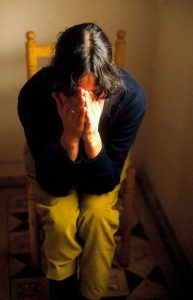
The scene is moving. A woman comes out to encounter Jesus. She doesn’t belong to the chosen people. She’s a pagan. She comes from the cursed people of the Canaanites, who had fought so much against Israel. She is a woman alone and nameless. Maybe she’s a single mother, widow or has been abandoned by her family.
Matthew only notes her faith. All her life gets summed up in a cry that expresses the profundity of her misfortune. She comes up from behind his disciples. The suffering of her daughter, possessed by «a very bad demon», has become her own pain: «Lord, have compassion on me».
At that moment, the woman reaches the group, stops Jesus, prostrates herself before him and on her knees says to him: «Lord, help me». She doesn’t accept Jesus’ explanations, dedicated to his tasks in Israel. She doesn’t accept the ethnic, political, religious and sexist exclusion that so many women encounter, suffering loneliness and margination.
It’s then that Jesus manifests himself in his full humility and greatness: «Woman, how great is your faith! Let it be done as you wish». The woman is right. Other explanations don’t matter. What’s first is to relieve suffering. Her petition coincides with God’s will.
What do we Christians do today in the face of the cries of so many women alone, marginalized, mistreated and forgotten by the Church? Do we leave them on the side, justifying our abandonment by the demands of other tasks? Jesus didn’t do that.
José Antonio Pagola
Translator: Fr. Jay VonHandorf


